Why Is My Attic So Hot?


As the temperatures climb across Northern Virginia, Maryland, Richmond, and Philadelphia, most homeowners are thinking about cooling bills, landscaping, and weekend getaways. However, there is one part of your home that bears the absolute brunt of the Mid-Atlantic summer: your roof.
Has your roof already suffered damage from heat or natural elements? Reach out today for a free inspection!
At Douglas Roofing, we’ve been a family-owned and operated business since my parents, Larry and Michelle Rimel, founded the company in 1985. Having grown up in this industry, I’ve seen firsthand how the intense humidity of a DC summer or the baking sun in Philly can prematurely age a roof.
Because we specialize in full exterior transformations—roofing, siding, gutters, and windows—we know that your roof isn't just a layer of shingles; it’s a complex system designed to protect your home. In this guide, we’ll explore how summer heat affects your home and what you can do to ensure your roof is prepared for the season.
Many homeowners assume that roof damage only happens during winter ice storms or fall hurricanes. In reality, the sustained heat of July and August can be just as destructive.
Think of UV rays as a constant, slow-motion "sunburn" for your shingles. Over time, these rays break down the chemical compounds in roofing materials. For older roofs (10+ years), this causes the asphalt to become brittle, leading to the loss of protective granules. Once those granules are gone, the underlying mat is exposed, making it vulnerable to leaks.
In our region, it isn't uncommon to have a 95-degree afternoon followed by a sudden, cooling thunderstorm. This rapid temperature change causes "thermal shock." Your roofing materials expand in the heat and contract quickly when cooled. Over time, this constant movement can cause shingles to warp, buckle, or pull away from the flashing.
In places like Richmond and the DMV (DC, Maryland, Virginia), the humidity is legendary. High moisture content in the air prevents materials from "breathing" properly. If your roof is already nearing the end of its lifespan, this trapped moisture can accelerate the deterioration of the roof deck.
If you take one thing away from this article, let it be this: A roof is only as good as its ventilation system.
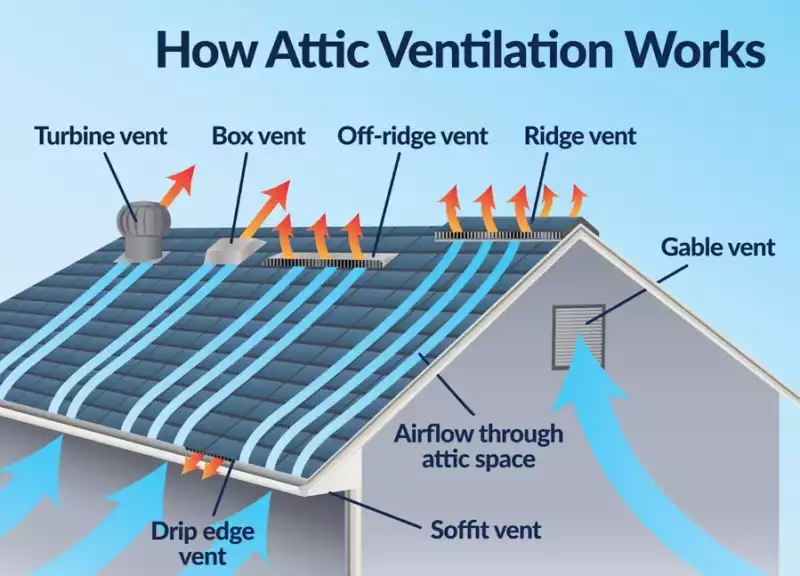
In the peak of summer, the temperature inside a poorly ventilated attic can soar to over 150 degrees Fahrenheit. This heat doesn't just stay in the attic; it radiates down into your living spaces, forcing your HVAC system to work overtime and driving up your energy costs.
More importantly, that trapped heat "bakes" your shingles from the inside out. When we perform full roof replacements at Douglas Roofing, we don't just swap out shingles. We analyze the intake and exhaust balance of your attic. Proper ventilation allows cool air to enter through the soffits and hot air to escape through ridge vents.
Signs your ventilation is failing this summer:
While Douglas Roofing focuses on full replacements rather than minor shingle patches, we believe in being a helpful resource for our community. Preparing your home for the summer involves more than just checking the AC; it involves a holistic look at your home’s exterior.
Summer in the Northeast and Mid-Atlantic brings heavy, sudden downpours. If your gutters are clogged with spring debris (like oak tassels or maple "helicopters"), water will pool at the edge of your roof. This standing water, combined with high heat, creates a breeding ground for mold and can cause the fascia boards to rot. If your gutters are sagging or over 15 years old, summer is the ideal time to consider a full gutter replacement to ensure water is moved safely away from your foundation.
Your roof and siding work together as a thermal envelope. If your siding is cracked or warped from previous heat cycles, it can allow heat to penetrate the walls of your home, making your roof’s job even harder. During our decades in business, we’ve found that upgrading to modern, insulated siding can significantly reduce the thermal load on your entire property.
Skylights are beautiful, but they are essentially holes in your roof. If your skylights are older, the seals can dry out and crack under the intense summer sun. At Douglas Roofing, we often recommend replacing aging skylights at the same time as a roof replacement to ensure a seamless, watertight seal that can withstand the expansion and contraction of the summer heat.
We often get calls from homeowners asking for small repairs on roofs that are 15 or 20 years old. At Douglas Roofing, we pride ourselves on honesty. If your roof is over 10 years old and showing signs of heat damage—such as widespread granule loss, "balding" shingles, or significant warping—a small repair is often a temporary bandage on a larger problem.
Investing in a full roof replacement isn't just about stopping leaks; it’s about upgrading your home’s technology. Modern roofing materials are designed with higher solar reflectance and better thermal resistance than the materials used back in the early 2000s.
As a family-owned business, we treat your home like it’s our own. We understand that a roof replacement is a significant investment. That’s why we focus on high-quality, long-term solutions that provide peace of mind for the next 30+ years.
When we handle a project in Northern Virginia, Maryland, or Philadelphia, we take the local climate into account. We know the specific wind patterns of the Chesapeake and the heat-island effects of DC and Philly. We choose materials that are built to withstand our weather.
To keep your home safe and cool this season, follow this simple checklist:
The summer heat is relentless, but your roof doesn't have to suffer. By understanding the importance of ventilation and recognizing the signs of heat-related wear and tear, you can make informed decisions about your home’s protection.
If you’ve noticed that your roof, siding, or gutters are struggling to keep up with the elements, reach out to us. At Douglas Roofing, we’ve been protecting families in the Mid-Atlantic since 1985, and we’d be honored to help you prepare your home for many summers to come.
Ready to upgrade your home’s protection?
Visit us at www.douglasroofs.com to learn more about our full replacement services in Northern Virginia, Maryland, Richmond, and Philadelphia.
.png)
.png)