What to Do After A Summer Hailstorm

One minute it's a warm summer afternoon. The next, hail is hammering your roof, denting your gutters, and leaving you wondering just how bad the damage really is. If you've experienced a hailstorm in Northern Virginia, Maryland, Philadelphia, or Richmond, you already know how quickly the weather can turn — and how unsettling it is to walk outside afterward and survey the scene.
The good news: if you act quickly and follow the right steps, you can protect your home, document your damage properly, and maximize your chances of a successful insurance claim. Here's exactly what to do in the hours and days after a summer hailstorm.
Before you move a single branch or sweep up any debris, grab your phone and start taking photos and video. Documentation is the foundation of any insurance claim, and the more thorough you are, the better.
Walk the perimeter of your home and capture:
These surface-level items are easy to photograph and serve as strong supporting evidence that a significant storm occurred. Don't skip this step — even if the damage looks minor, photos taken immediately after the storm carry more weight with insurance adjusters than ones taken days later.
We know it's tempting. You want to see the damage for yourself. But walking on a potentially compromised roof — especially one that may be wet, weakened, or structurally damaged — is dangerous and can actually make things worse. You could inadvertently cause additional damage that your insurer may not cover.
Leave the roof inspection to the professionals. A qualified roofing contractor knows exactly what hail damage looks like, where to find it, and how to document it in a way that supports your claim.
Schedule your free post-storm inspection with Douglas Roofing. We'll get eyes on your roof safely and give you a clear, honest assessment. Book online → or call us at (703) 255-9599.
While you're waiting for a professional to inspect the roof, do a walkthrough inside your home. Head up to the attic if you can safely access it, and look for:
Then check the ceilings throughout your home, particularly in upper-floor rooms or areas directly below the roofline. Even small water intrusions can escalate quickly, so if you spot active leaking, place buckets to catch the water and call a roofing professional right away.
Once you've documented the damage and done your interior walkthrough, contact your homeowner's insurance provider to report the storm event. Most policies have a window for filing storm-related claims, so don't delay.
When you call, have the following ready:
Your insurer will typically send an adjuster to assess the damage. Here's an important tip: you have the right to have your own contractor present during that inspection. Having a trusted roofing professional there alongside the adjuster can make a meaningful difference in how your claim is evaluated.
After major hailstorms, opportunistic contractors — often called "storm chasers" — flood affected neighborhoods offering quick repairs and aggressive sales pitches. They may knock on your door, pressure you to sign contracts on the spot, or promise to "work with your insurance" in ways that sound too good to be true.
Be cautious. Always verify a contractor's license, check reviews, and work with a company that has an established local presence. A reputable roofing company will never pressure you into a same-day decision.
Douglas Roofing has been serving the Mid-Atlantic region since 1985. We're a family-owned business with deep roots in the communities we serve — not a company that shows up after a storm and disappears just as fast.
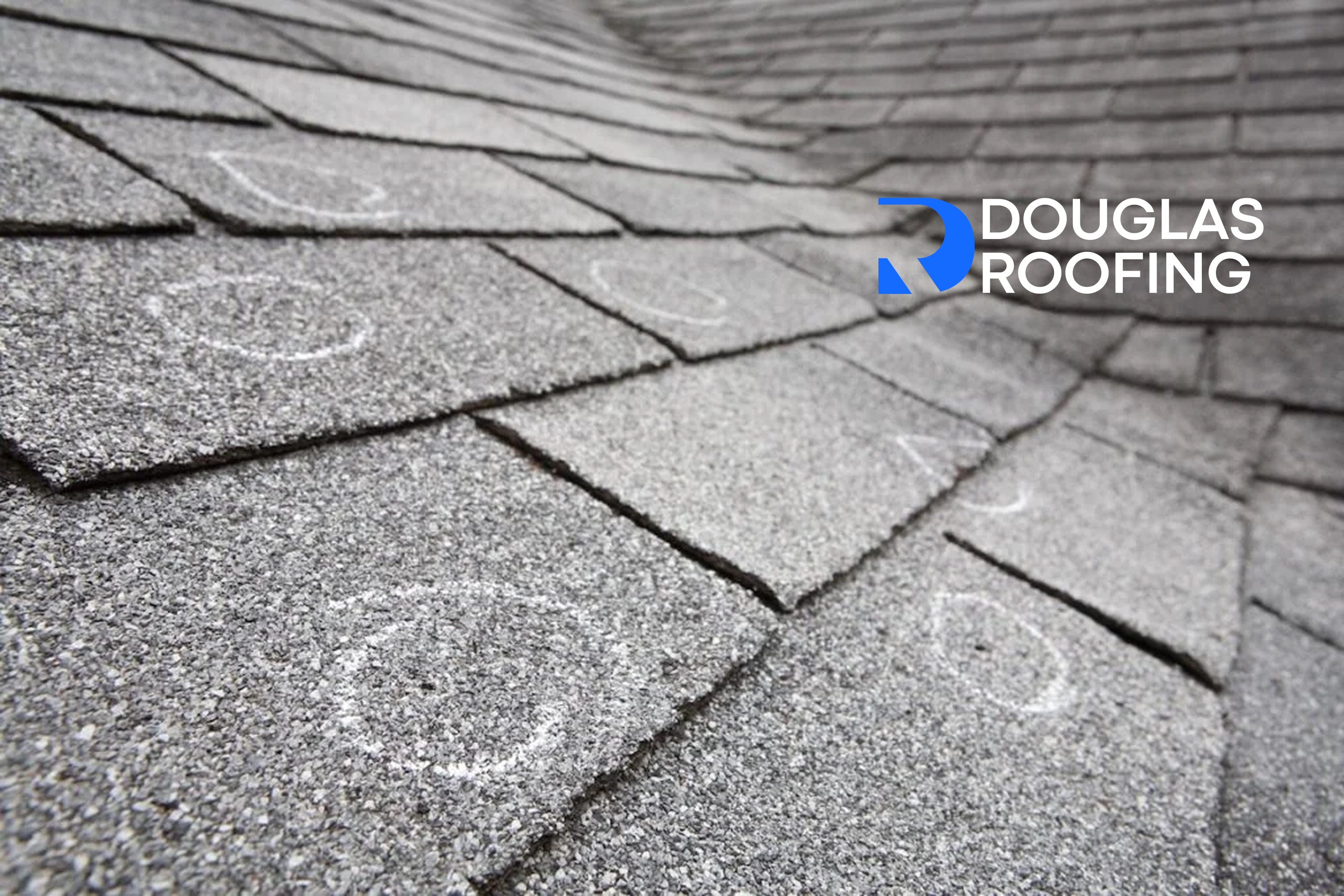
Hail damage isn't always visible to the untrained eye. While dented gutters and cracked siding are obvious, the more serious damage often happens at the granule level on your shingles. Hail knocks granules loose, exposing the asphalt underneath to UV rays and accelerating deterioration. This kind of damage won't cause an immediate leak — but it shortens your roof's lifespan significantly and will lead to bigger problems down the road.
A professional inspection after any significant storm is the only way to know the true condition of your roof. It also creates a documented record, which matters if damage shows up months later and you need to connect it back to the storm event.
At Douglas Roofing, we understand how stressful it is to deal with storm damage. That's why we make the process as simple and transparent as possible — from your free inspection through your final walkthrough. Our team has extensive experience working with insurance companies and will advocate for you every step of the way.
Don't wait for a small problem to become a costly one. If your home was hit by a recent hailstorm, let's take a look — at no cost to you
.png)